Calf Health Champions
University of Glasgow
2024
University of Glasgow
Abstract – Cryptosporidiosis causes substantial health and economic issues for the livestock industry, particularly affecting newborn calves. This study investigates the effectiveness of probiotic supplementation in reducing the prevalence and severity of Cryptosporidium infections in young calves in a commercial setting. Probiotics, which are known for their benefits on gastrointestinal health, have been suggested to offer therapeutic therapy against Cryptosporidium due to their impact on gut microbiota and immune response.
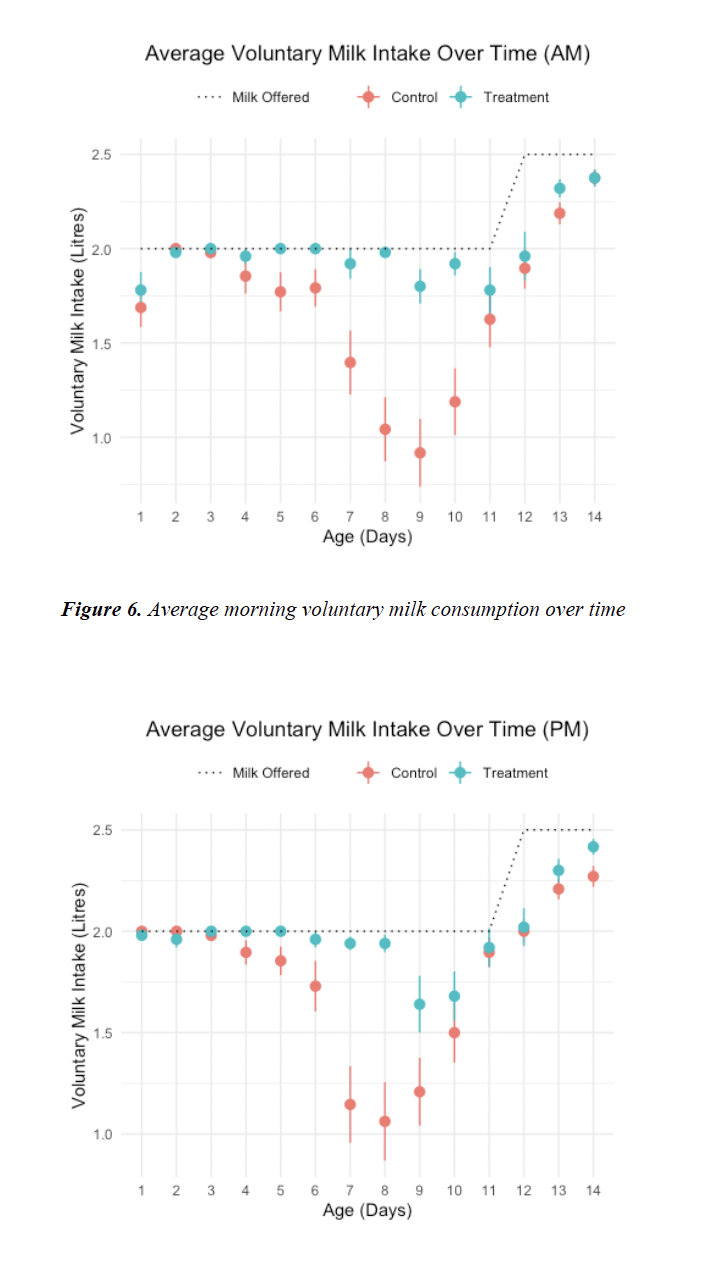
The study, which was conducted over 6 weeks on a commercial dairy farm, involved 50 calves systematically separated into treatment and control groups. Probiotic supplementation was administered to the treatment group following manufacturer guidelines. Data collecting methodologies included faecal sample testing, used to confirm the presence of Cryptosporidium, as well as to confirm that Cryptosporidium was the causative agent of diarrhoea amongst the calves. Scour scoring, body weight measurements, and body temperature were also monitored and recorded to compare the severity of symptoms amongst groups. Results indicated a significant decrease in Cryptosporidium prevalence in the treatment group, as well as significant impacts on milk consumption, temperature regulation and weight gain (p < 0.05). Probiotic supplementation resulted in greater morning milk consumption (Estimate = 0.327 litres, SE = 0.046 litres, t-value = 7.145, p < 0.0001) and evening milk consumption (Estimate = 0.1847 litres, SE = 0.0446 litres, t-value = 4.139, p < 0.0001). These findings demonstrate the positive impact of probiotic supplementation on feeding behaviour.
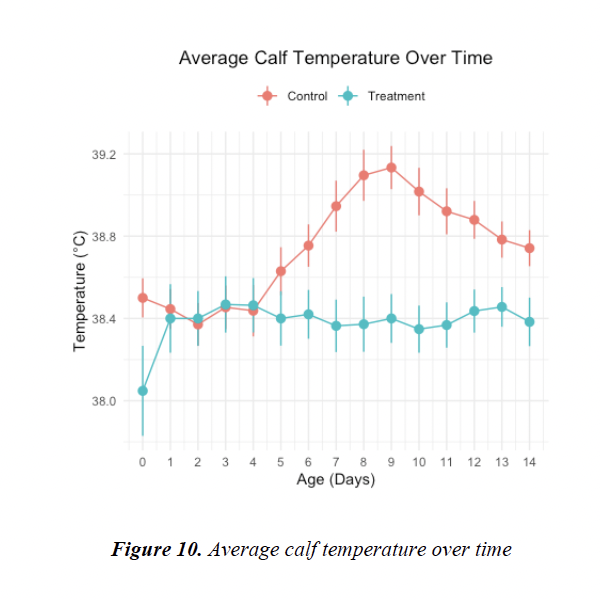
Temperature regulation in treated calves was notably improved, as evidenced by lower temperatures compared to the control group (Estimate = -0.36ÅãC, SE = 0.09ÅãC, p = 0.0052). Additionally, the analysis of scour scores revealed a significant effect of the treatment on reducing scour severity (Estimate = -1.83, z = -8.25, p < 0.001). Despite variations in breed, sex, and pen, the probiotic supplementation consistently resulted in lower scour scores, indicating improved gastrointestinal health and reduced disease severity. Treatment effects varied with age, suggesting dynamic responses over the study period. Post-hoc comparisons identified significant temperature changes at ages 7, 8, 9, 10, 11, and 12 days old (p < 0.05), indicating the course of infection, and how symptoms vary over time.
This research highlights the potential of probiotic supplementation as a viable option for reducing Cryptosporidium infections in young calves, opening up new possibilities for improved livestock health and economic sustainability in the agricultural industry.
Calf Health and Growth Metrics – Click on each chart to view full details on the effects of treatment on calf weight, temperature, and milk intake over 14 days.